Key takeaways
- Prolonged sitting, looking down at phones and inactivity are the main causes.
- Screen at eye level, regular breaks and daily movement prevent most problems.
- Cat-cow, neck stretch, glute bridge and shoulder-blade squeezes take a few minutes a day.
Modern life is making posture disorders more and more common. Long hours at a desk, constant computer and phone use and a sedentary lifestyle all affect spinal health. The result: back, neck and lower back pain, rounded shoulders and kyphosis.
Common causes of posture disorders
- Desk work and long sitting. Hours at a computer pull the spine out of its natural alignment. Many people round their shoulders forward without noticing, which creates muscle imbalances.
- Phones and tablets. Looking down at a screen strains the neck muscles, a condition often called “tech neck”. Over time it can cause chronic neck pain and misalignment.
- Poor sitting habits. Sitting badly for long periods, in the car, at the office or at home, weakens the back and core and often leads to lower back pain.
- Too little movement. Without enough exercise, the muscles that support the spine weaken and the body adapts to poor posture.
How to prevent posture problems
- Sit well. Sit upright with back support and your screen at eye level.
- Hold your phone higher. Keep it near eye level and take regular screen breaks.
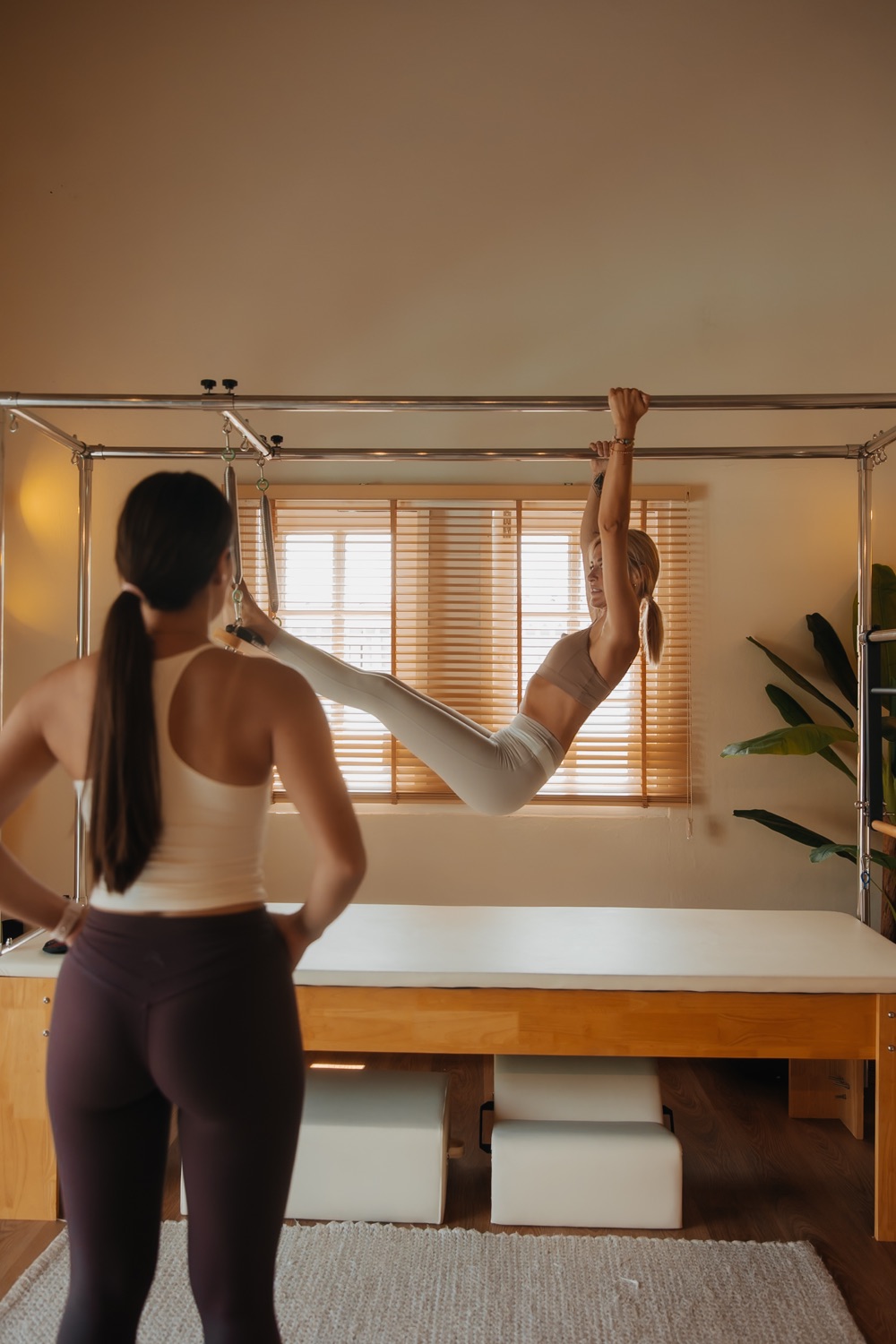
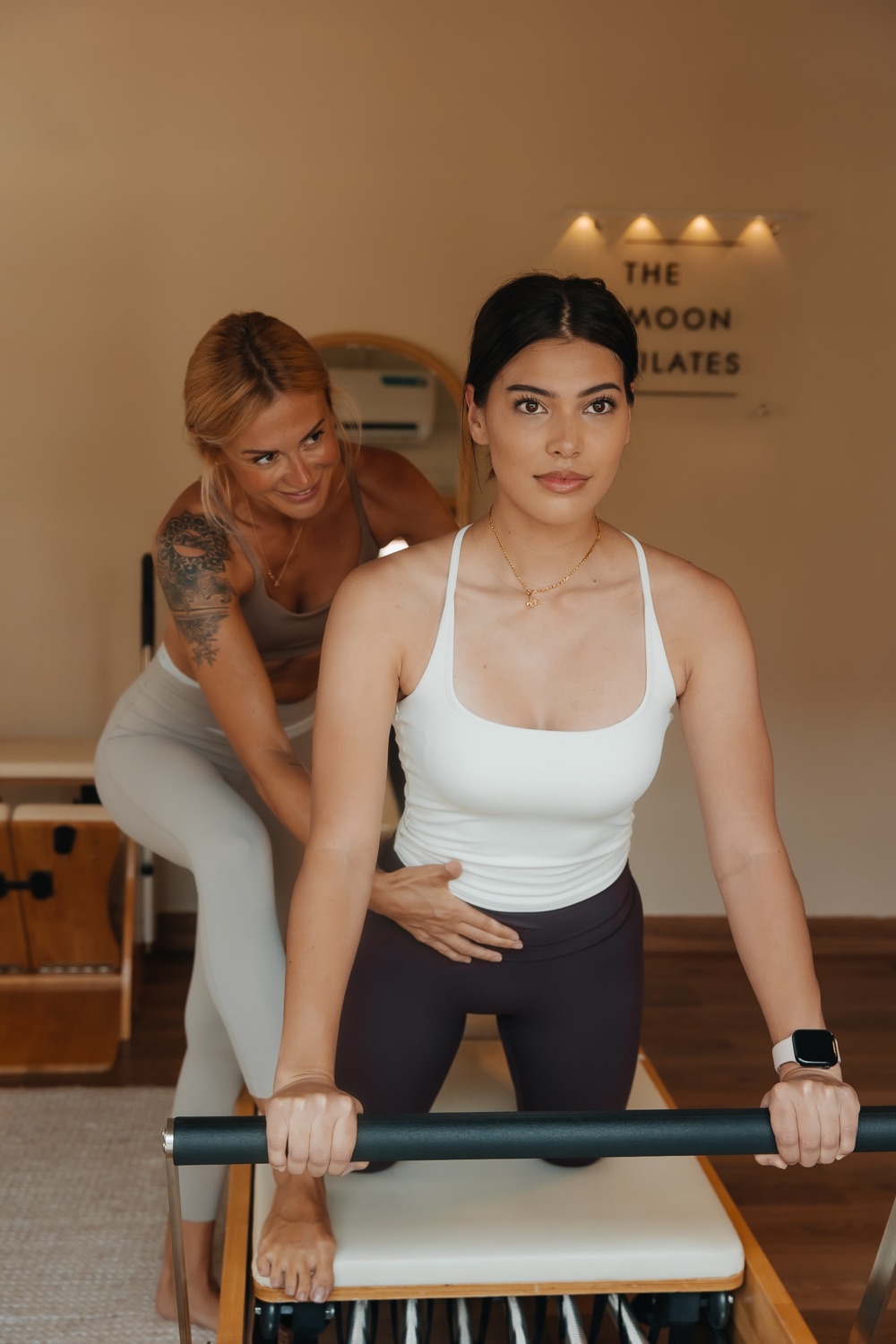
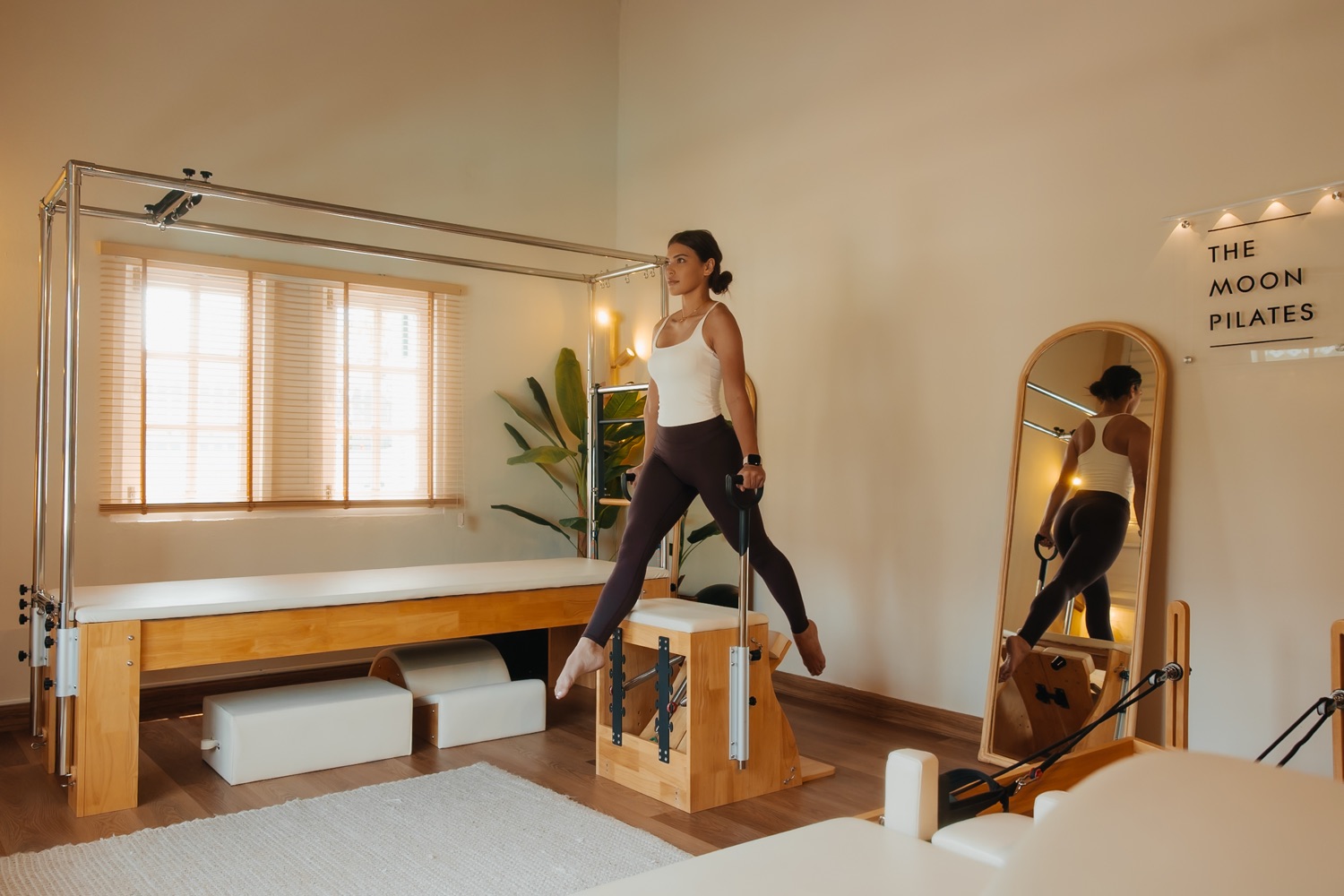
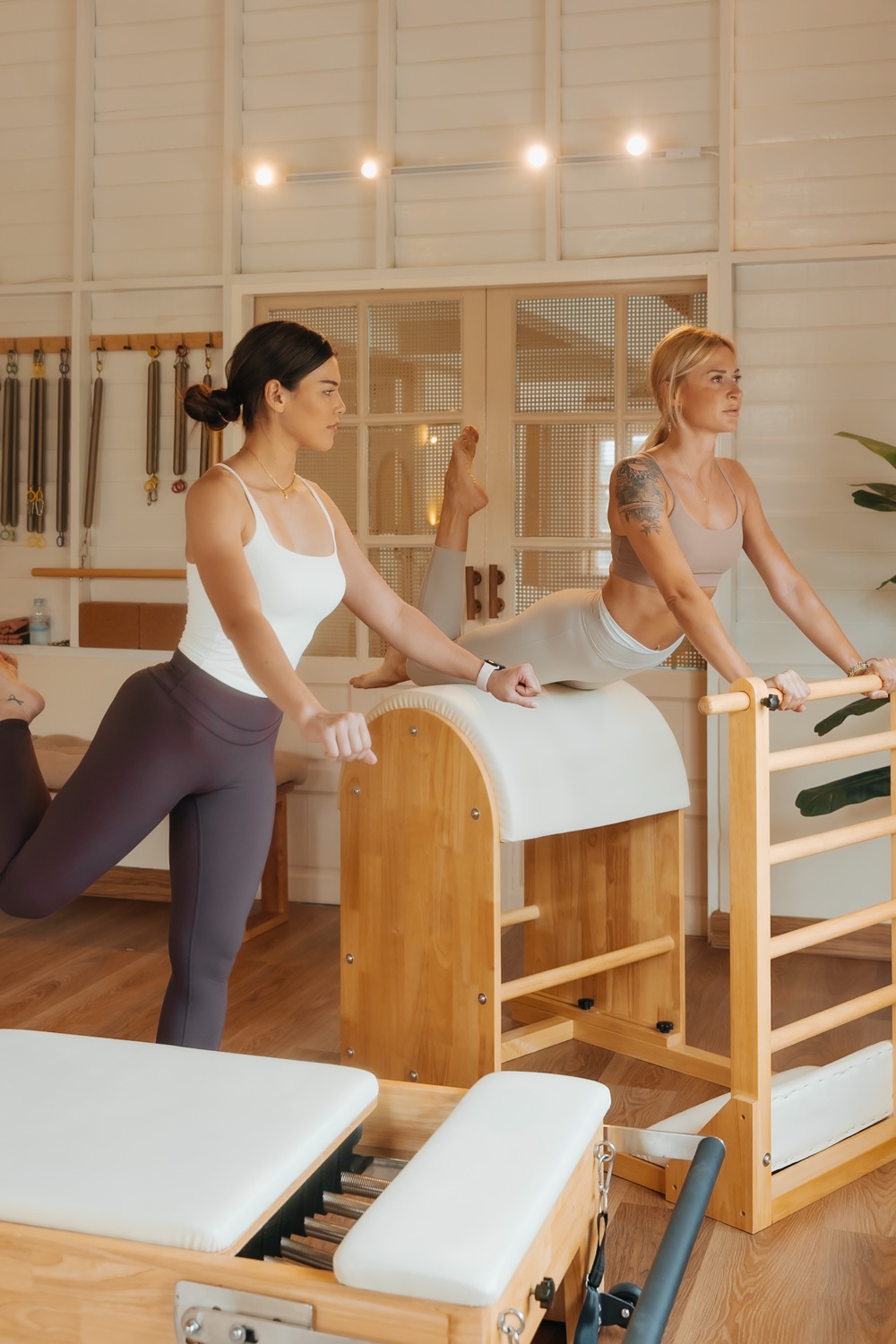
- Exercise regularly. Pilates strengthens the muscles of the back, shoulders and core that support the spine.
- Move more. Stand up regularly, stretch and walk every day.
Ignored, posture problems can turn into chronic pain. With small, mindful changes you can correct your posture, protect your spine and feel more energetic.
4 exercises for neck and spine health at home
1. Cat-cow stretch
Mobilises the spine and releases the neck and lower back.
- Come onto hands and knees in a tabletop position.
- Inhale, let your back sink and lift your head (cow).
- Exhale, round your back and tuck your chin (cat).
- Repeat slowly 8–10 times.
2. Neck stretch
Relaxes the neck muscles and reduces tension.
- Sit or stand upright.
- Gently draw your head to the right with your right hand while lowering your left shoulder.
- Hold for 20–30 seconds, then switch sides. Repeat through the day.
3. Glute bridge
Strengthens the muscles that support the spine.
- Lie on your back, knees bent, feet flat on the floor.
- Lift your hips until your body forms a straight line.
- Hold for 5 seconds, lower slowly. Do 10–12 repetitions.
4. Shoulder-blade squeeze
Ideal for desk workers with rounded shoulders.
- Stand tall and draw your shoulders back, bringing the shoulder blades together.
- Hold for 5 seconds and relax. Do 10–12 repetitions.
The bottom line
A few minutes of these exercises every day support your neck and spine and improve your posture over time. For lasting change, combine them with regular Pilates, where an instructor can spot and correct the habits you can’t see yourself.
Frequently asked questions
What is tech neck?
Tech neck is strain in the neck and upper back from looking down at phones and screens for long periods. It can cause pain, stiffness and a forward head posture.
Can posture be corrected in adults?
Yes. Strengthening the core and upper back, stretching tight muscles and changing daily habits can improve posture at any age.
Which Moon class helps posture most?
Private Reformer is best to start, because your instructor assesses your posture first. Mat Pilates and Group Reformer build on it.
Written by
Tümay, Pilates Instructor
Balanced Body® comprehensive certified, with a degree in coaching education and specialised prenatal training. Teaching Pilates since 2009.
Meet Tümay